Wildfire Research

The Problem

A Natural Force, Amplified

Wildfires have been burning for centuries, so what’s the big deal? The problem lies in the relationship that wildfires share with climate change. While fires have no doubt been a natural occurring phenomenon forever, climate change is making these wildfires more frequent and more damaging year over year. In the U.S. alone, 7 million acres have burned on average since 2001. Compared to the 1990s, that figure is over two times the average acreage burnt (3.3 million).

Tap through the graph below to view year-by-year data for the U.S.

U.S. Wildfires — 2000 to 2025

January – December  ·  Source: NOAA

Acres burned
Number of fires
Acres per fire
2001–2020 avg: 7,000,514 acres
2001–2020 avg: 68,707 fires
2001–2020 avg: 103.92 acres/fire

Rising Temperatures with Burning Consequences

Our global temperature has been on an increasingly dramatic rise since 1975. With a record setting year in 2024, it seems that trend is only going to continue. The steady increases in temperature contribute a huge amount toward how much more severe wildfires are becoming. According to the National Oceanic and Atmospheric Administration (NOAA), a 1 degree C increase annually can cause an up to 600% increase in the median burned area per year in western forests. While our temperature isn’t rising a full degree yearly yet, any increase is more land burnt, more houses lost, more environments destroyed.

Global surface temperature — 1990 to 2025

Annual anomaly relative to 1951–1980 baseline  ·  Source: NASA GISS / GISTEMP v4

Smoke Knows No Borders

The flames of a wildfire aren’t the only threat to worry about. Perhaps equally as damaging is the smoke the fires produce. Smoke from these fires travels much further than the flames themselves, affecting millions of people in surrounding areas. This smoke carries multiple toxic substances, perhaps most notably being PM2.5, a particulate matter. These particles are microscopic and have the ability to enter our lungs and bloodstream, causing considerable long term damage. According to a report conducted by Stanford University, wildfire smoke is 10 times as toxic to breathe compared to normal air pollution via fossil fuels. Researchers have also stated that there is no safe level of exposure to wildfire smoke and that the more exposure, the worse it is for our health long term.

U.S. Wildfire Data

Wildfire Smoke Days by County

Annual average number of predicted wildfire-related smoke days, 2006–2020.
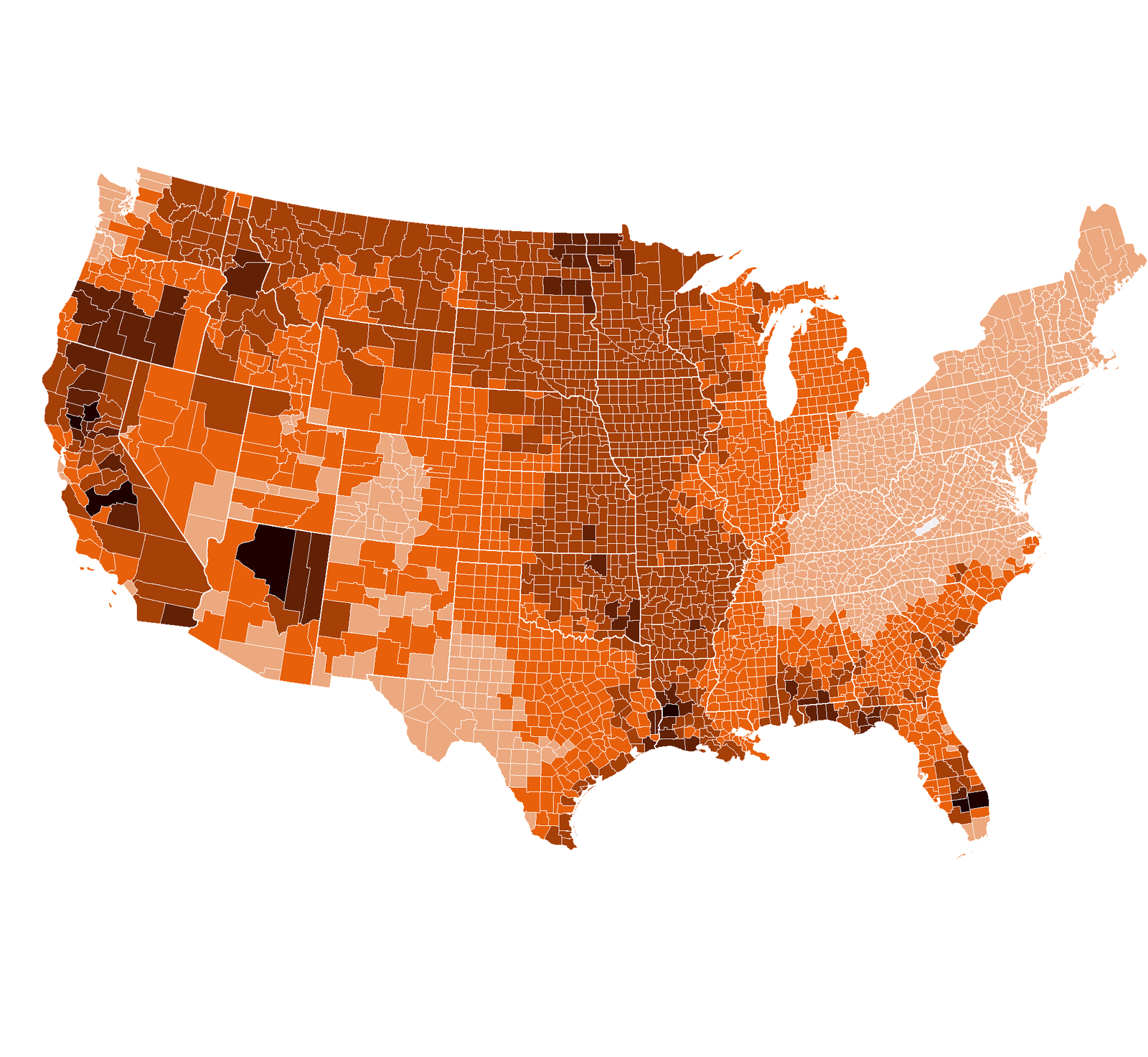
U.S. county map showing wildfire smoke days
Smoke days per year
1–20
21-40
41-60
61-80
81-100
100+

A National Problem

Wildfire smoke is able to travel much further than many would expect. Today, every county can expect to see at least 16 wildfire smoke days a year, with some recording over 100. This map reveals many patterns: California and its surrounding states are a common wildfire spot. But perhaps more eye opening is the northern states data. While not typically a wildfire location, smoke from Canadian wildfires commonly travels south and through all these areas.

The Human Cost

Wildfire smoke is not just a minor inconvenience. It is a serious issue with major consequences without proper precautions. Behind every data point here is a person’s life. PM2.5 has been proven to be responsible for increases in cardiovascular and respiratory diseases. These diseases can and often do lead to death, as revealed in the map to the right. From 2006-2020, wildfire smoke has claimed the life of 164,000 human beings.

U.S. Wildfire Data

Wildfire Smoke Deaths

Total Wildfire PM2.5 mortality 2006-2020.
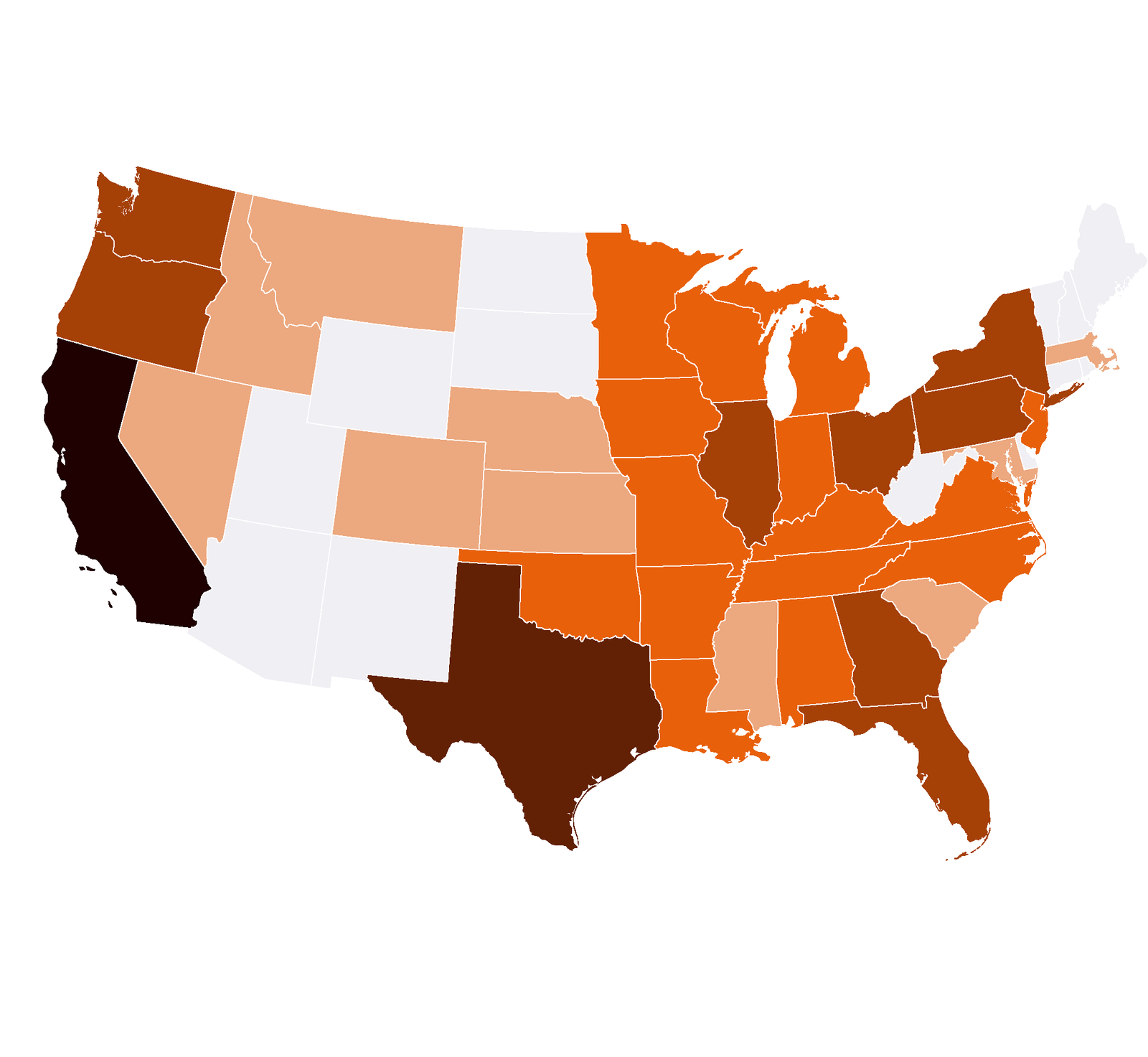
U.S. county map showing wildfire smoke days
Smoke days per year
1–1,250
1,251–2,500
2,501–5,000
5,001–10,000
10,001-20,000
20,000+
When the Air Isn’t Safe

So how can we protect ourselves during wildfire smoke days? Unfortunately, simply staying inside in a well filtered room is the best option. A proper fitting N95 mask can help reduce exposure, but is not a guaranteed solution. Perhaps more important is protecting people who are more sensitive to the smoke. Children, elderly, those with pre-existing respiratory conditions, and pregnant individuals are all at a higher risk. Ensuring their safety during heavy smoke days is something we all must work towards.

A State Set Ablaze

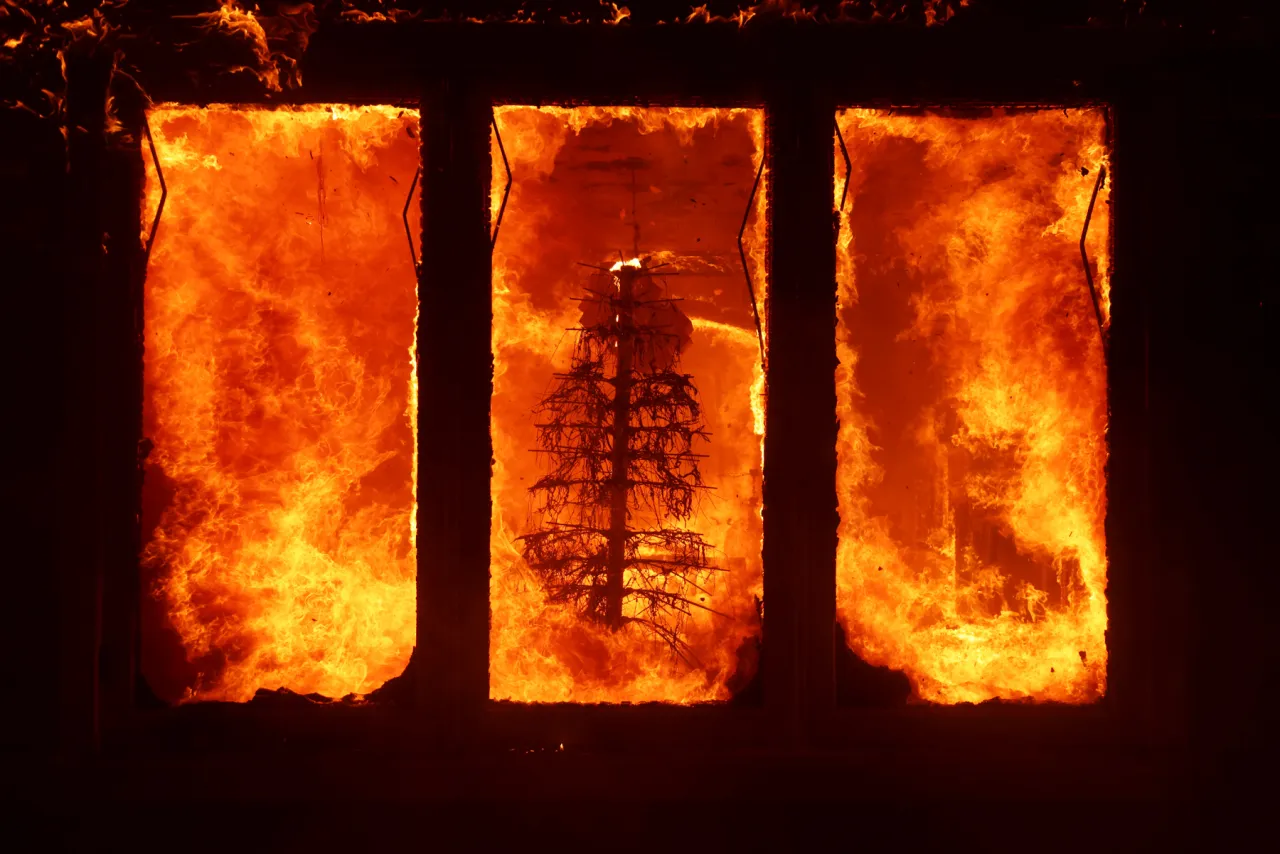
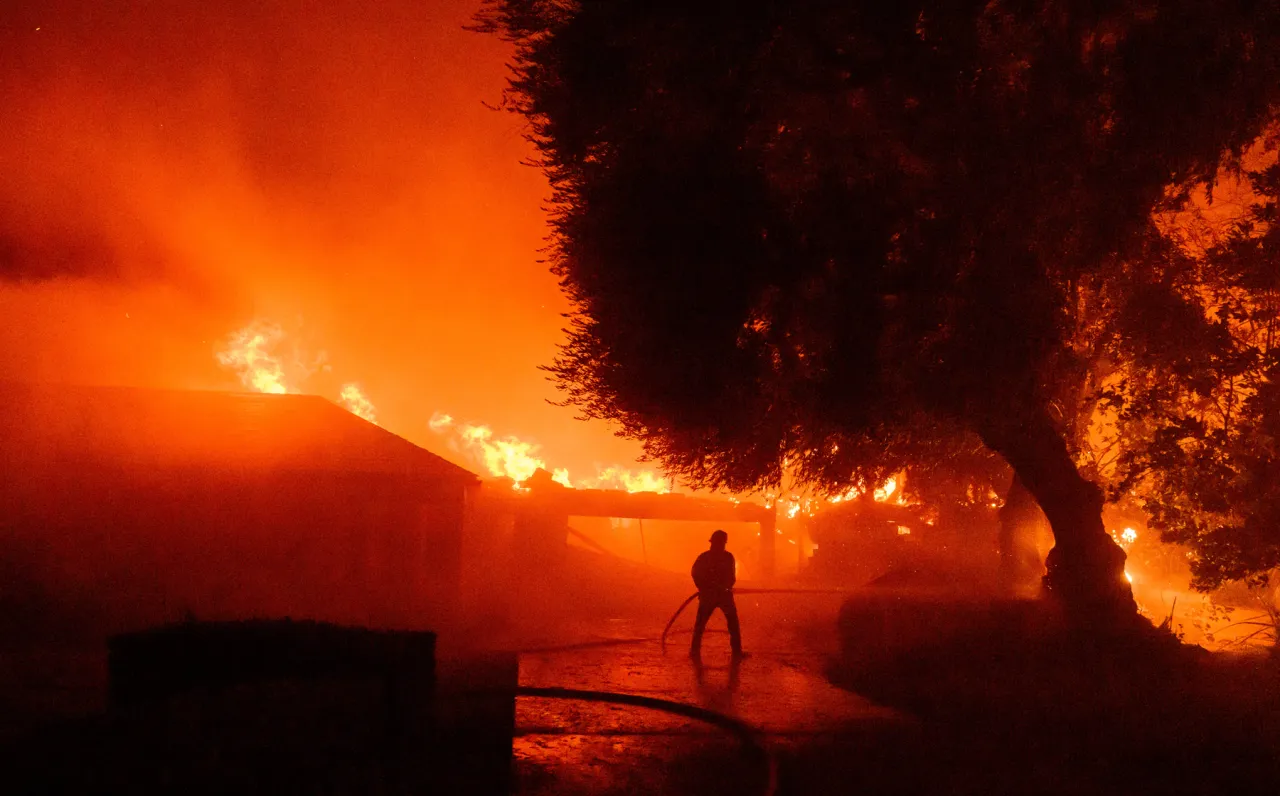
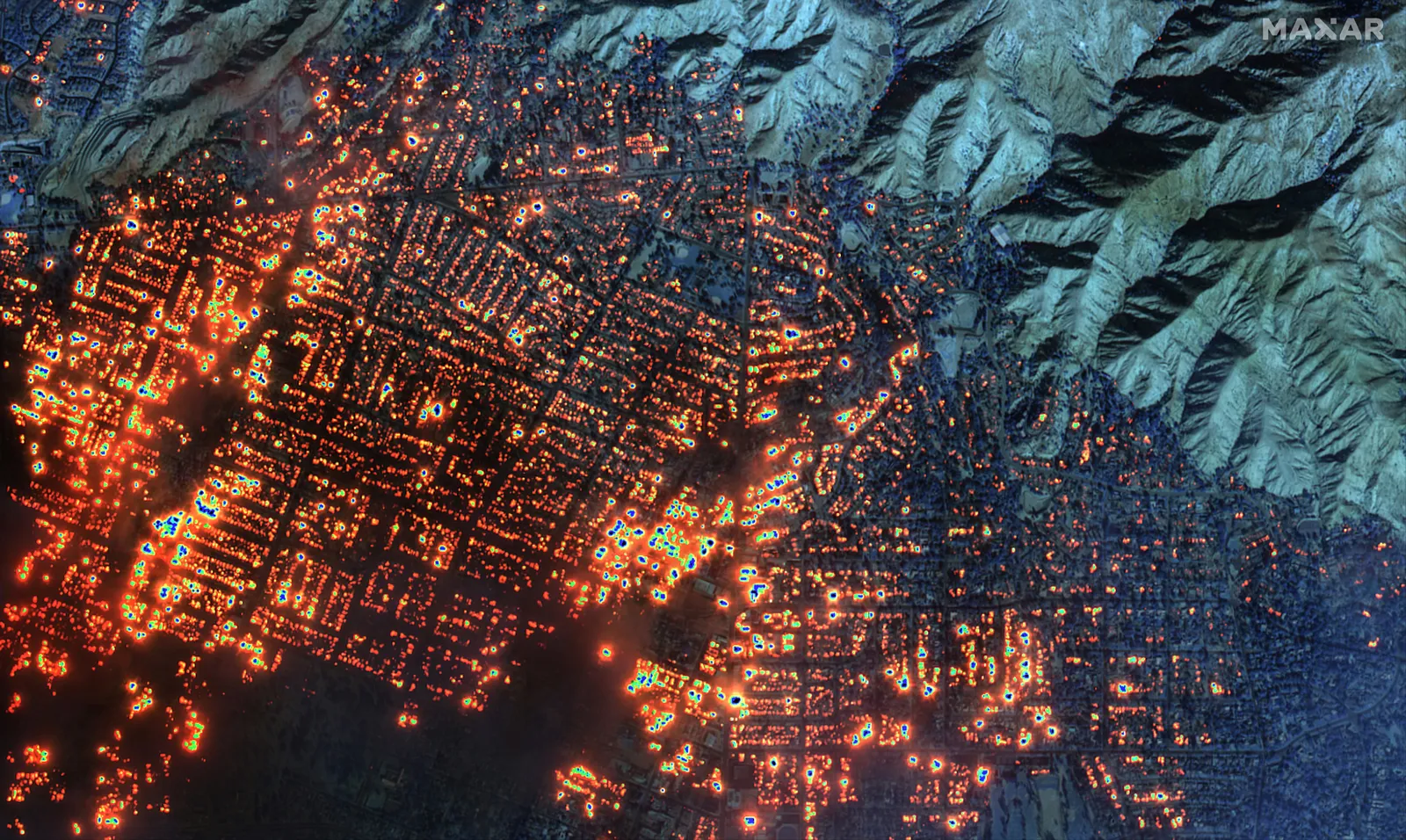
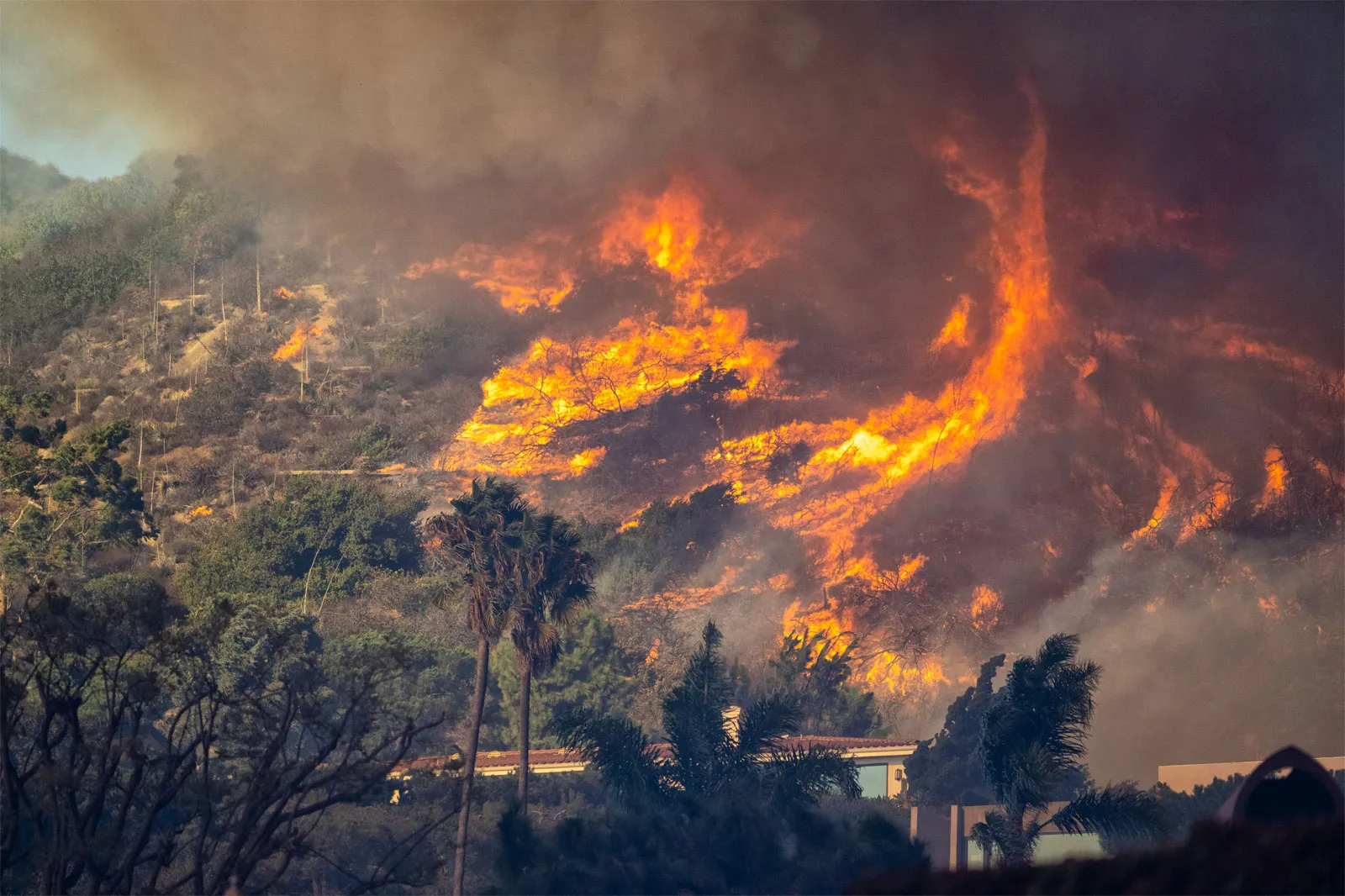
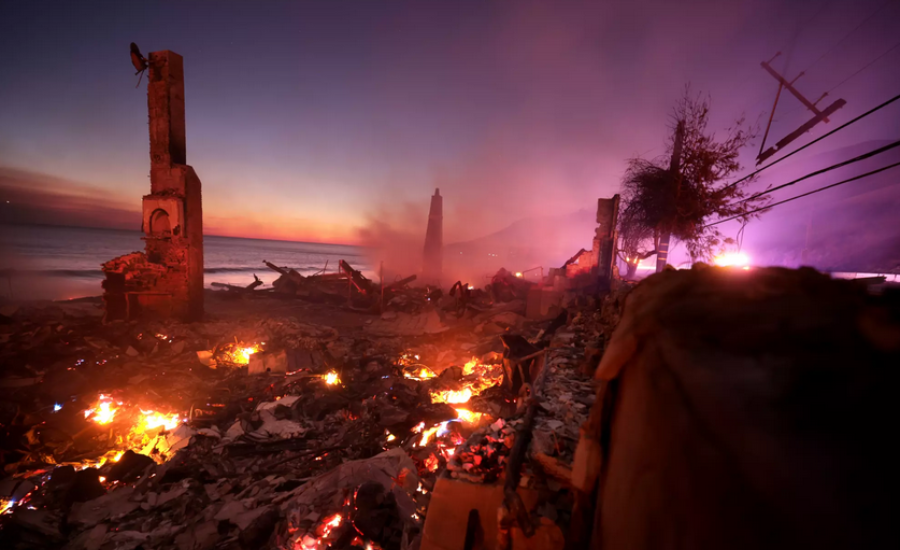
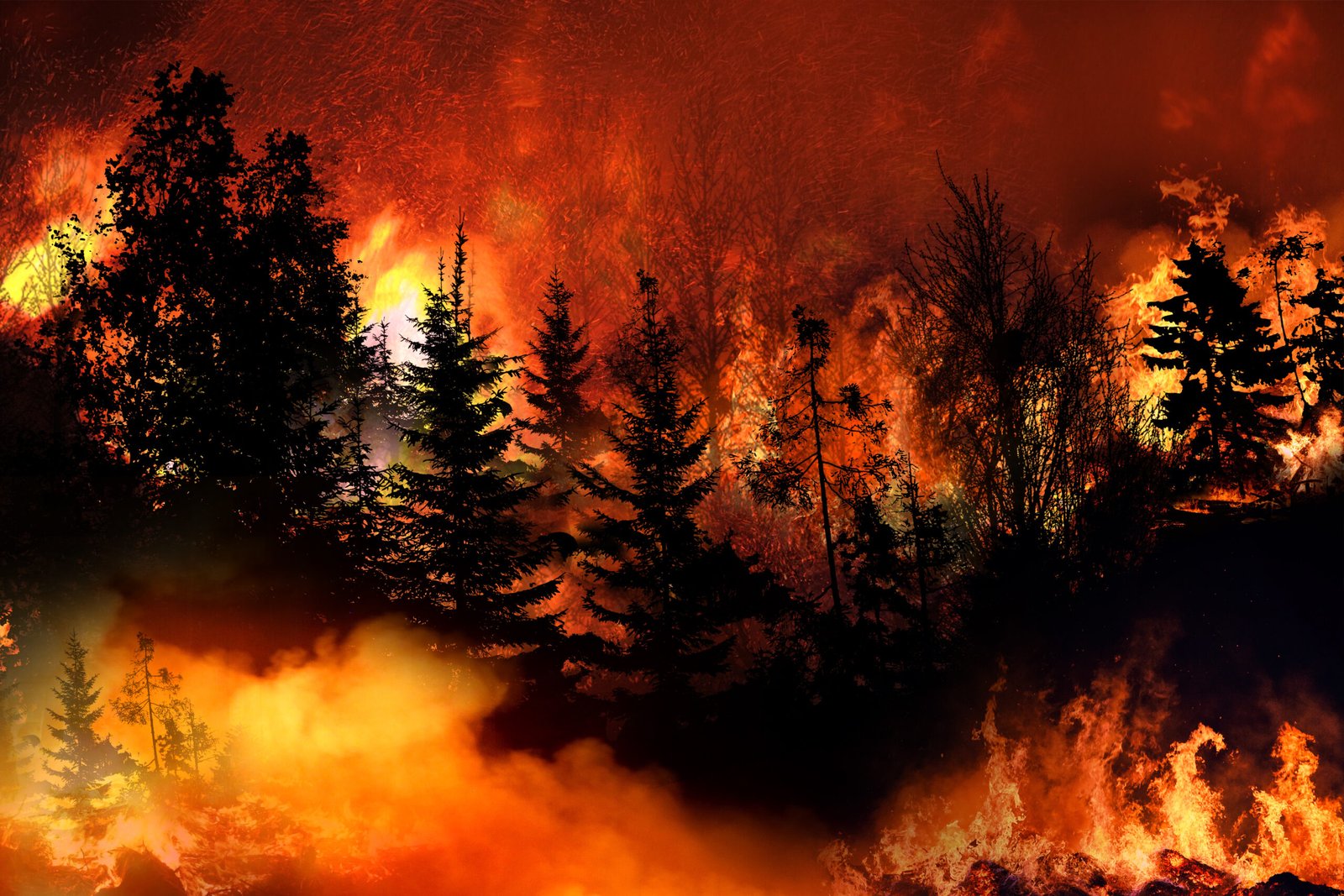
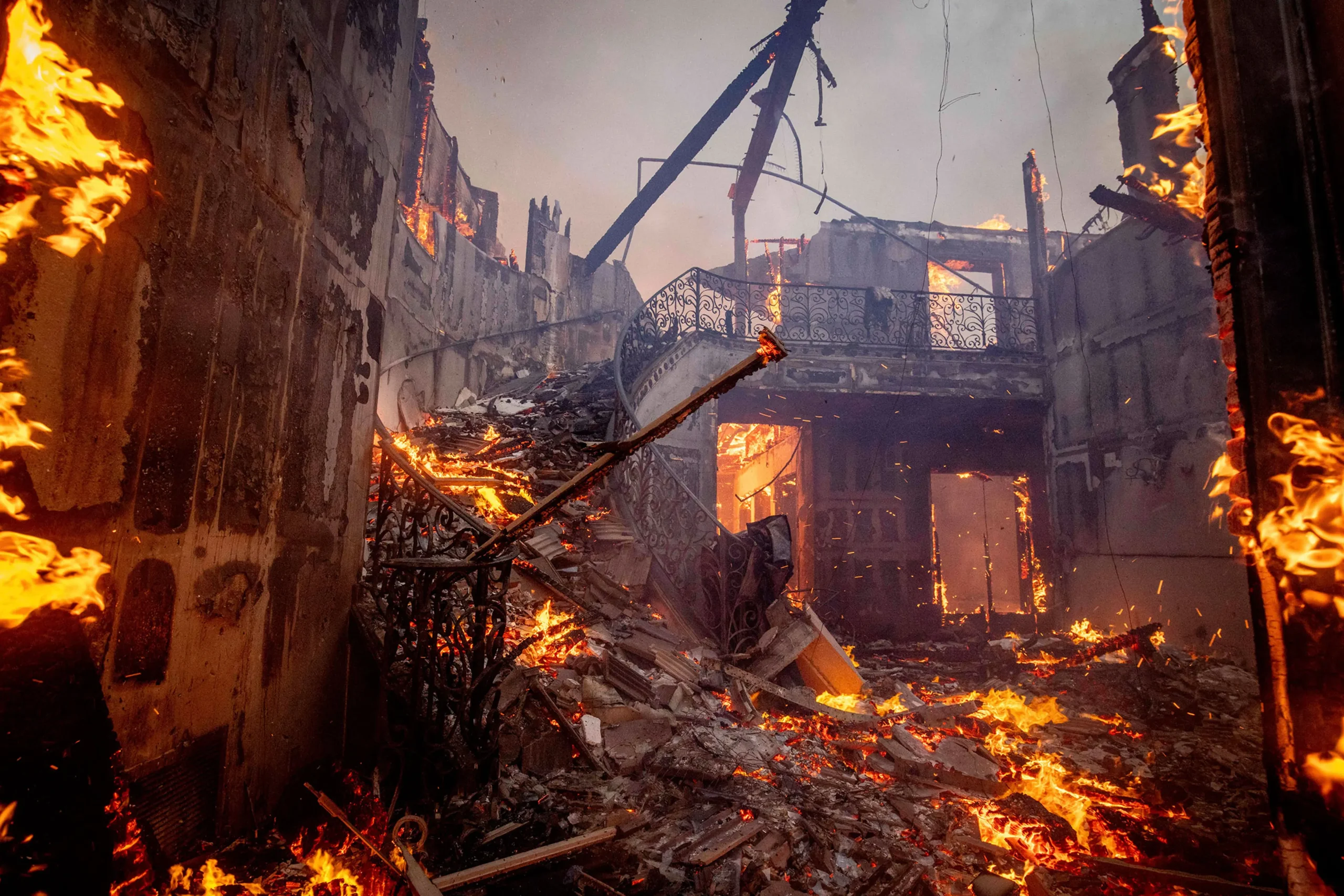
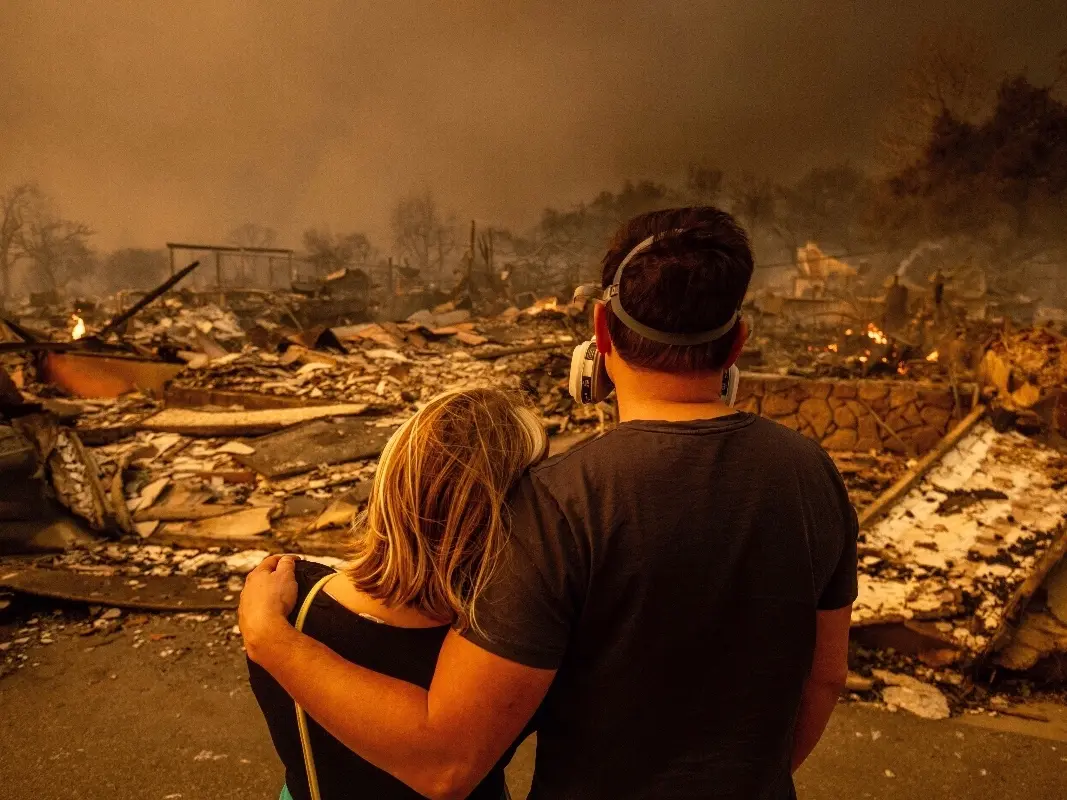
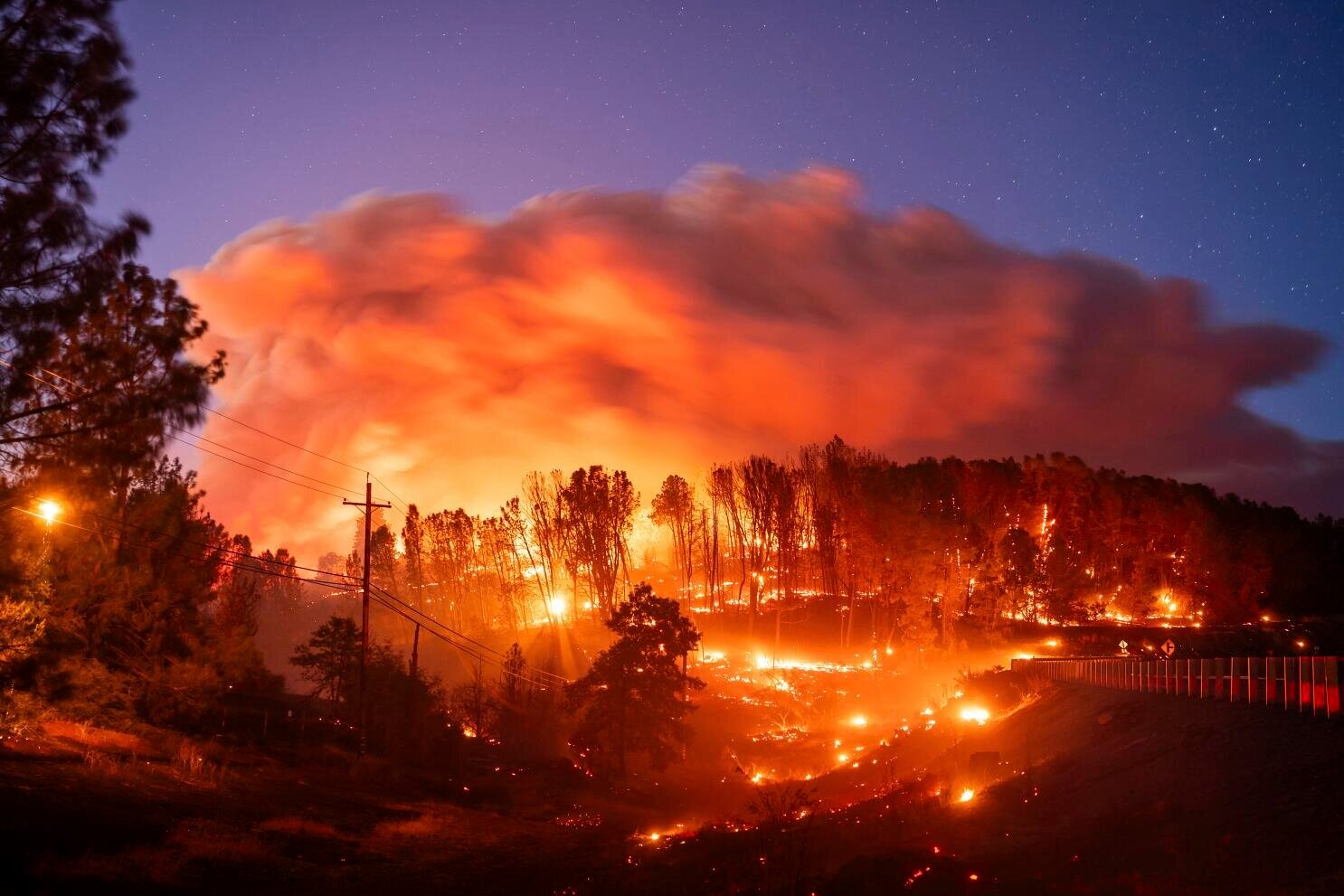
2025 saw America’s costliest wildfires ever. Two major wildfires, in the Palisades and in Eaton, blazed for 21 days in January, leaving nothing in its path of destruction. The fire caused billions in damage and forced over 200,000 people out of their homes. It also exposed millions more to toxic smoke fumes, such as PM2.5. Fires like this have become almost expected in California, with 18 of California’s top 20 worst wildfires occurring since 2000. And it’s only getting worse–10 of those fires burnt in 2020 and 2021 alone.

31

Total Deaths

$61.2

Billion in Damages

16k

Homes Destroyed

California wildfire
Los Angeles, January 2025
California wildfire
Palisades Fire, January 2025 (Ethan Swope/AP)
California wildfire
Eaton Fire, Altadena (Josh Edelson/AFP/Getty Images)
California wildfire
Aerial view, Los Angeles County (Maxar Technologies/Getty Images)
California wildfire
Palisades Fire, January 2025 (Hans Gutknecht—MediaNews Group/ Los Angeles Daily News/Getty Images)
California wildfire
Aftermath, Pacific Palisades (Wally Skalij/Los Angeles Times)
California wildfire
Pacific Palisades (Shutterstock/stockpexel)
California wildfire
Aftermath, Pacific Palisades (Ethan Swope—AP)
California wildfire
Aftermath, Pacific Palisades (AP Photo/Ethan Swope, File)

So What’s Next?

Wildfires will only continue to worsen if action is not taken against them. Every one of us can help more than we may realize. In 2025 alone, 69,556 wildfires were human-caused. Unattended campfires, improper precautions while burning debris, using equipment carelessly, or even something as small as a cigarette butt tossed on the ground can spark a fire. A single spark can have monumental consequences. As a society, we must continue to put pressure on government officials to do something about climate change. Wildfires will never be fully suppressed – but they can be contained.